Author Archives: Bonsai Nerd

Artificial light for bonsai

It is possible to keep a bonsai alive with artificial light such as a lamp as long as the lamp emits the spectrums of light needed by plants to grow. This starts with their need to perform photosynthesis. Chloroplasts are the organelles within plant cells which are responsible for photosynthesis, and they do this using photosynthetic pigments – substances which absorb photons of light.

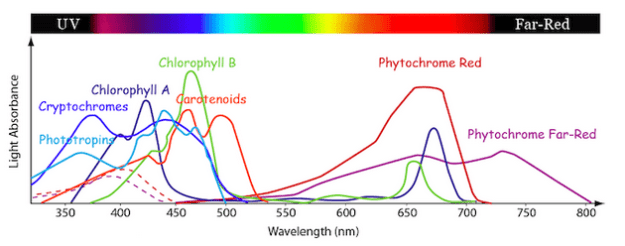
You may be surprised to learn that there are actually multiple photosynthetic pigments in chloroplasts and that land plants always have two forms of chlorophyll – chlorophyll a (C55H72MgN4O5) and chlorophyll b (C55H70MgN4O6)ref, and six carotenoids – neoxanthin, lutein, β-carotene, violaxanthin, antheraxanthin and zea. The role of chlorophylls are to be “light collectors, whereas carotenoids, apart from participating in light harvesting, are also involved in photoprotection”.ref Different levels of these pigments are contained in angiosperms vs gymnosperms – to see the differences you can review the data in this article (figure 4) but in summary gymnosperms have more chlorophyll (a + b) and deciduous angiosperms have the least chlorophyll b. The different chlorophylls and carotenoids absorb different spectrums of light as shown in the chart at the bottom of this post.

But it’s not just the process of photosynthesis which uses light in plants. Actually many of their growth responses depend on light – including seed germination, flowering, leaf senescence, stomatal and chloroplast development, cell differentiation and root growth. Plants also have a circadian clock which controls when processes happen – such as stomatal closing & opening, flower closing & opening, leaf position changes and so on. The circadian clock uses light sensors to keep the clock in time with the world.

Plants use phototropins, phytochromes, cryptochromes and UV detectors to perform different light sensing tasks and to trigger signals throughout the plant.

Phytochromes are red and far-red light photoreceptors, whose role in plants is to detect favourable conditions for growth and to signal within the plant accordingly – five have been identified, known as phytochromes A to E.ref They function not just as light detectors but as temperature sensors since they are able to detect infrared light which is associated with heat.ref I was interested to read that phytochromes A, B and E stimulate lateral root production while phytochrome D inhibits it.

Phototropins are responsible for the phenomenon of phototropism whereby a plant grows towards the light – they contain blue light photoreceptors.ref Cryptochromes are another form of blue light photoreceptor only recently discovered, they’ve been shown to inhibit elongation of the germinating stem and to form an input to the circadian clock.ref

Several plant growth processes have been found to be initiated by UV-B light, summarised in this table but including stomatal closing and the production of compounds such as anthocyanins which protect the plant from damaging UV levels. UV-B light has been found to be detected in plants by a receptor known as UVR8ref.

So below there is a nice diagram put together by a producer of LED grow lamps (they’ve left the UV receptor off but everything else is there). As is clear to see, there is a wide range of spectra required by the different photoreceptor apparatus in a plant. So back to the whole point of this post – can you use artificial light? Well yes but for full functioning of your tree it should provide the spectra needed – which is basically most of the range of light from UV to infrared excluding green and yellow. The LED grow lamp seller has an article on finding lights which meet the requirements below (I do not know them, I just think their website makes sense).

https://www.ledgrowlightshq.co.uk/chlorophyll-plant-pigments/

The other factor to consider is that leaves are adapted to respond to the parallel rays of light from the sun. Their internal cell structure, for example, is organised to encourage the scattering of light to the spongy mesophyll cells which are underneath the palisade cells.ref In general a light bulb or LED light is not going to produce parallel rays of light so the photosynthetic efficiency of the light will be reduced (since less light will make it into the spongy mesophyll cells) and more power will be needed from the light.ref

Personally I’ve never used artificial light for a bonsai – the one indoor bonsai I have (a Ficus retusa) lives quite happily on a table near a window in my kitchen where it gets natural light throughout the day and copes with the large variations in photoperiod experienced in the UK. But theoretically it should be possible to use a light instead, assuming you have one which meets the requirements outlined in this post in terms of spectrum and intensity.

If you end up with a light which doesn’t reflect the spectra needed, this may impact your tree’s growth. For example “low blue light from warm white LEDs increased stem elongation and leaf expansion, whereas the high blue light from cool white LEDs resulted in more compact plants”ref – you can end up with ‘leggy’ plants if you don’t have enough light.

What each nutrient does (x17)

Understanding the exact role of individual plant nutrients is actually quite complicated. This is because many nutrients have multiple roles, and research hasn’t always clearly identified each role. It’s also because nutrients don’t act on their own – they usually form part of a larger molecule, such as an enzyme, and they usually interact with other nutrients, molecules and environmental factors such as pH. Then it requires diving deep to the molecular level to work out how chemical reactions take place and even how individual electrons move in the presence of the enzyme. I’ve read a bunch of papers and articles about the nutrients below but there is sure to be more out there – consider this a taster.

Macronutrients

Macronutrients are those inputs which plants require in substantial volumes in order to grow and metabolise. There are six macronutrients, of which three are metals.

1. Nitrogen: nitrogen is needed by plants for various reasons but one of the most important is for photosynthesis. Nitrogen is a component of chlorophyll, the green pigment in leaves which absorbs the energy from sunlight to break apart water in the photosynthesis reaction. The chemical formula of chlorophyll is C₅₅H₇₂O₅N₄Mg – as you can see both nitrogen and magnesium are needed in addition to carbon, hydrogen and oxygen which is obtained from air and water.

Secondly, nitrogen is a key component of amino acids, which are used in all living things to make proteins. There are 21 amino acids in plants which are connected together in a myriad of different sequences and shapes to make the different proteins. Examples of plant proteins include the storage material in seeds and tubers, plant cell membranes and the enzyme known as RuBisCO. RuBisCO is present in leaf cells alongside chlorophyll, and enables carbon fixation during photosynthesis – it is said to be the most abundant protein on Earth and represents 20-30% of total leaf nitrogenref. So photosynthesis requires chlorophyll and RuBisCO, both of which rely on nitrogen as a component element.

Finally nitrogen is present in the four bases used to create DNA (adenine, thymine, guanine & cytosine) and RNA (adenine, urasil, guanine & cytosine) which enables cell replicationref.

Nitrogen needs to be in soluble form to be used by plants, either as nitrate or ammonium, which requires the presence of specific bacteria either in the soil or in the plant’s roots. As I mentioned in my first post about nutrients, Hallé states that obtaining nitrogen is a constant challenge for plants. This is why the fertiliser industry is so prosperous – but unfortunately also so damaging for the environment. The Haber-Bosch process used to make Ammonia (NH3) is “one of the largest global energy consumers and greenhouse gas emitters, responsible for 1.2% of the global anthropogenic CO2 emissions”ref and nitrate runoff from highly fertilised fields damages rivers and ecosystems.ref The natural world has some clever ways to make nitrogen accessible – some plants incorporate bacteria into their roots which can do this, and in old growth Douglas fir forests, lichen in the canopy which contain cyanobacteria capture nitrogen from the atmosphere and when they fall to the forest floor they rot into components which trees can access (Preston, ‘The Wild Trees’). Similarly a relatively sustainable source of nitrogen for plants is rotting organic matter (along with the necessary microbes) – compost and manure are good options.

2. Phosphorus is needed in plants – and in fact in most living thingsbecause it’s a key component of the molecule used to store, transport and release energy in cells. That molecule is called adenosine triphosphate (“ATP”) and it’s created during photosynthesis by adding a phosphorus atom to adenosine diphosphate. The ATP can then be transported throughout the organism to be used where energy is required, at which point it’s converted to ADP (adenosine diphosphate) which releases energy back to the cell. Phosphorus also provides the structural support for DNA and RNA molecules, needed for cell replication.

For plants phosphorus is fundamental to photosynthesis, as a phosphorus-containing substance called RuBP (C5H12O11P2) is used to regulate the action of RuBisCO in fixing carbon from carbon dioxide.

Phosphorus is a key part of most fertilizers and manure is a good sourceref.

3. Sulphur is a constituent of two amino acids – methionine and cysteine. Cysteine is used to create methionine as well as glutathione, an anti-oxidant which helps plants defend themselves against environmental stressref. Methionine is involved in cell metabolism and the majority of its use in the cell is to synthesise ‘AdoMet’ which is used in methylation reactions (such as DNA methylation which regulates gene expression) and to create the plant growth regulator ethyleneref.

Manure is a source of sulphur for plants.

Metals

In addition to the top three outlined above, it turns out that plants need some atoms of various metals as well. In order to understand why, we need to know that plant cells are full of chemical reactions which perform all the different functions required for metabolism. Helping these chemical reactions along are a type of protein known as enzymes. Enzymes act as a catalyst to chemical reactions in cells, speeding them up without consuming the enzyme material itself. Some enzymes have metal ions at their heart which assist the reaction (called ‘co-factors’) and these play a critical role in the enzyme’s function (for example magnesium is used in RuBisCO).

Three of the six macronutrients needed by plants are metals – potassium, calcium and magnesium.

4. Potassium is one of the three major macronutrients usually found in NPK garden fertilisers (K is the chemical symbol for potassium), reflecting its important role across several different dimensions of plant growth. One important role is in the production of proteins. As outlined above, proteins make up a large part of plant biomass, and the key protein RuBisCO is necessary for photosynthesis. Proteins are manufactured on structures called ribosomes within the cell – and ribosomes need potassium in order to do their jobref.

The other important role for potassium is in providing the pressure within plant cells which keep them stiff and ‘turgid’ – without it they would become flaccid and the plant would fall over. The manipulation of turgidity within leaves is one way a plant controls the level of air coming into the leaf – to close off the air holes (stomata) the guard cells around the stomata are made more turgid which closes the gap between them. Potassium is involved in this process.

In nature the main source of potassium is the weathering of rocks, but it’s also contained in organic matter, particularly in seaweed.

5. Magnesium is a component of the chlorophyll molecule and is key to the operation of RuBisCO, both of which enable photosynthesis. It is found in soil from the weathering of magnesium-containing minerals – the University of Minnesota recommends dolomitic limestone or tap waterref.

6. Calcium isn’t just used for human skeletons, it’s also used for plant structure as it strengthens the cell walls in plants. Its presence (or absence) is also used for signalling of stresses to the plant, allowing it to activate defences against pathogens. Sources of calcium for gardening include lime or shells.ref

Micronutrients

Micronutrients are required in much smaller amounts than macronutrients, although they are still required.

7. Boron appears to have been identified as a plant micronutrient mainly due to the effects of not having enough of it, with researchers having observed that boron deficiency leads to root, leaf, flower, and meristem defects. The precise role that boron plays is not easy to find in the literature, other than it being generally agreed to be important as a structural component of the plant cell wall, helping to provide rigidityref. Boron also appears to be required for reproduction, and a lack of it can affect pollen germination, flowering and fruiting. Because boron has poor mobility in a plant and cannot be moved from one part of the plant to another, continued exposure to it is needed in order to avoid a deficiency – but the exact levels vary widely by plant.

Sources of boron include borax (sodium borate) but since boron toxicity is apparently possible at high levels be very careful with this approach. Obtaining boron from organic matter or liquid seaweed instead may be less risky.

8. Chlorine was added to the plant micronutrient list in 1946 since it was found that chlorine molecules are required as part of the machinery of photosynthesis – particularly relating to the water-splitting system. In addition to this essential function, chlorine has also been found to be beneficial at macronutrient levels, enabling “increased fresh and dry biomass, greater leaf expansion, increased elongation of leaf and root cells”ref.

Since most people will be using tap water for watering their bonsai, getting adequate chlorine to your trees should not be a problem, but if you are using rainwater perhaps consider tap water every now and then.

9. Copper is essential for plants because along with iron it makes up part of an enzyme called cytochrome oxidase which performs the last of a sequence of steps in respirationref. Cytochrome oxidase is present in the mitochondria of plant cells – these are separate organelles with their own unique DNA which are dedicated to energy production. Copper is also found in plastocyanin, a protein which is responsible for electron transfer in the thykaloid – the light-dependent part of the chloroplastref. This protein is key to the conversion of light energy to chemical energy in the cell during photosynthesis. Copper is found in the soil but apparently is deficient in soils with high amounts of organic matterref.

10. Iron is present in a large number of different enzymes within plant cells, appearing in chloroplasts (where photosynthesis takes place), mitochondria (where energy is created) and the cell compartment. Iron is therefore a key nutrient for growth and survival in plants – in just the same way it is with humans and other forms of life. Iron is a component of so many enzymes that there is a specific name for them – ‘FeRE’ or iron requiring enzymes (Fe is the chemical symbol for iron).

Iron can be toxic if too much is present, so plants have evolved mechanisms to remove it when it gets too high. ref1 ref2 ref3

11. Manganese is also a co-factor to enzymes involved in photosynthesis, as part of the ‘oxygen-evolving complex’ in photosystem II, which contains 4 manganese ions. Photosystem II “is the part of the photosynthetic apparatus that uses light energy to split water releasing oxygen, protons and electrons”ref.

12. Molybdenum is used by certain enzymes to carry out redox reactions (reactions where electrons are gained or lost from a molecule); these include nitrate reductase, xanthine dehydrogenase, aldehyde oxidase and sulfite oxidaseref. Its role facilitating the nitrogen pathway in a plant is important since nitrogen is the nutrient plants require the most of, and the presence (or absence) of molybdenum can make a big difference to the efficiency of nitrogen uptake which in turn affects growth rates and plant health.

13. Nickel is a co-factor to the enzyme urease which breaks down potentially toxic urea (a product of metabolism) into ammonia which can then be used as a source of nitrogen for the plantref.

14. Zinc is the final micronutrient alphabetically but not in terms of importance. It is associated with 10% of all proteins in eukaryotic cells including those of plants, assisting as a co-factor to many enzymes and so enabling many different biological processes including transcription, translation, photosynthesis, and the metabolism of reactive oxygen species. Zinc also plays a role in ensuring the correct folding pattern for proteins as they are created.ref

Interestingly, zinc deficiency is associated with smaller leaves and internodes, which you might consider a benefit for bonsai, but perhaps not at the expense of your trees’ core biological processes!

Wait – I only got to 14 and there are supposed to be 17 – what the heck? Oh yeah – here they are (15) carbon and (16) oxygen from carbon dioxide, and (17) hydrogen from water (H2O). Did you know that the oxygen emitted from plant photosynthesis actually comes from the water and not from the carbon dioxide? More in Photosynthesis.

Embolisms

You may have heard of embolisms in the context of humans – this is when an artery is blocked by something like a blood clot or a bubble of airref. A similar process can happen with trees and their xylem (water carrying) vessels.

As outlined in trees’ water system, water enters the tree’s root cells and is pulled in a continuous stream up through the xylem by the negative pressure created by leaf transpiration in the canopy. The xylem is actually a “continuous water column that extends from the leaf to the roots”.ref

If a bubble of air gets into the xylem, this breaks the water transport process and stops water from below the bubble being lifted any further. This stops water from reaching any parts of the tree dependent on the xylem cells which have been affected. Embolisms in trees are also known as ‘cavitation’. This process is even audible and apparently explains half of the sound heard from drying wood.ref

Thomas explains this really well in chapter 3 of his book in the section ‘Air in the system’. He says embolisms can occur from water in the xylem being under too much tension (ie. the tree becoming too tall or too high a rate of water being transpired), from xylem damage, or from freezing.

Embolisms are relevant to bonsai enthusiasts for two main reasons. Firstly they explain why a tree may die if it isn’t watered. When in leaf (for deciduous trees) and all the time for evergreens, transpiration will occur as water evaporates from the leaves through their stomata. If transpiration happens faster than the tree can replace water through its roots, embolisms can occur. If too many embolisms occur, the tree might not have enough routes for water to reach the cells, or enough volume of water to meet their needs.

The second reason why embolisms are interesting from a bonsai perspective is that they also explain the two very different xylem structures which can be observed between trees and which have implications for their growth behaviour.

All conifers and some angiosperms called ‘diffuse porous’ trees, add to their xylem network each year, and have many smaller, narrower, interconnected xylem vessels which don’t allow large air bubbles to form. These trees have active xylem in multiple rings (Thomas says that conifers can have 30-40 years worth of rings still actively transporting water up the tree). In cross-section they have small ‘pores’ and a denser consistency.

The alternative approach is taken by ring porous trees, which regrow their xylem vessels every year, and only ever have a single ring of much larger, longer super-pipes of active xylem transporting water. These trees can grow much quicker because their water transport is more efficient in the right conditions (ie. not freezing). But they can’t break bud until they’ve constructed the new year’s xylem. This explains why some species such as oak leaf out relatively late – they have to spend time at the beginning of the season regrowing their xylem ring. An evergreen tree cannot be completely ring-porous, because it would not be able to supply water to its leaves through the winter.

Like everything in nature there are trees which are combination of the two as well. There are some nice microscope images of the xylem vessels of different types of wood here. The difference in size between coniferous species (whose xylem cells are called tracheids) and angiosperm species (whose xylem cells are called vessels) is show in the table belowref:

As can be seen, conifers have tracheids which individually don’t get much longer than 2-3mm or wider that 10-12 μm (note that the table uses a logarithmic scale). Ring porous species on the other hand have vessels in the 1-12cm range in terms of length, and 20-80 μm wide.

The implication for this from a bonsai point of view is that even though our trees are small, for those species which are ring porous trees (mostly deciduous angiosperms) embolisms are perhaps even more of a risk. The scale at which we are working means there are only a small number of vessels available for water transport – a 20cm high tree might have single vessels all the way from root to crown. To mitigate this risk we should ensure these trees are well watered especially when it is hot or windy, and that they have the energy and nutrients to regrow their xylem every season.

I’m still trying to find a definitive source with a list of which species are ring porous and which are diffuse porous, but here’s what I’ve found so far (Ennos, Thomas, and some reference articles ref):

  • All conifers are diffuse porous, as they have tracheids (short & narrow) providing their water transport. Embolisms in these tracheids dissolve naturally due to their small size.
  • Diffuse porous angiosperms have narrower vessels – they are still vulnerable to embolism but less than ring porous trees, and have adapted mechanisms to resolve them, such as pumping water (sap) up from the roots to refill the vessels in spring (Ennos): poplars, beech, birch, maple,
  • Ring porous angiosperms have wide, fast flowing vessels and routinely get embolisms every winter, requiring a new set of vessels to be grown every year: oak, ash, black locust, catalpa, chestnut, hickory, mulberry,

Xylem

The xylem and the phloem are the vascular system of a tree; they transport fluid to and from every cell in the plant, via structures that branch, divide and become very small – small enough to be able to reach every cell. But xylem and phloem don’t transport the same substance, like our blood vessels do. Instead the xylem carries water and dissolved nutrients up from the roots, and the phloem carries the products of photosynthesis (‘photosynthates’) from the leaves to other parts of the tree. This post is about xylem, I’ve also written one about phloem.

As mentioned, the function of xylem is to transport water (and nutrients) throughout the tree. Although as has been the case throughout the creation of this website, I’ve learned that plants are never as simple as they seem! Recent research has found many other substances in xylem sap as well as water and nutrients, including plant growth regulators, sugars and proteins. This studyref into poplar xylem sap found six plant growth regulators, 124 plant metabolites including salicinoids, coumarins and benzoates, and 289 proteins with major groupings including proteins related to defence, cell wall-related processes and catabolic processes (breaking down sugars).

There is evidence that xylem is used for translocating sugars from storage organs such as roots particularly when photosynthesis is not operating (eg. for deciduous species before they break bud in the early spring). For example “birch, which blooms in late winter, clearly transports hexoses in the xylem with a potential of providing nutrients to the developing tissues at rates that equal or exceed those provided through the phloem”. ref

The majority of water-conducting xylem in a tree is in fact mainly made up of dead cells. This makes sense because living cells have cell membranes, vacuoules and other organelles which aren’t needed for the transport of water – instead what’s needed is an open space which can store water and pass it to the next storage space. In fact xylem vessels do not work for water transportation until they are deadref.

Water moves through the xylem from the roots and up throughout the tree, in a continuous stream, evaporating from the leaves via the stomata. This evaporation is what pulls water up against the force of gravity. Since the process relies on continuity, if air bubbles form in the xylem this can be a problem, as explained in this post: embolisms. You can read more about this in: trees’ water system.

When new xylem cells are born, they go through a process of strengthening the cell walls with substances such as lignin, hemicellulose and pectin among others, ref, then the cell dies (often because the vacuoule bursts) and its contents are cleared out (digested by enzymes)ref. This leaves a space for water to enter and occupy. In angiosperms, which use vessels for their xylem, death occurs within a couple of days, while in gymnosperms, which have tracheids instead, this happens a lot later – for trembling aspen and Norway spruce around a month.ref

For trees – which undergo secondary thickening – there are two producers of xylem cells – the vascular cambium (located under the bark) and the procambium (located in growing tips).

The vascular cambium is a single layer of cells responsible for producing the xylem which becomes the trunk and wood of the tree. It produces new xylem cells throughout the growing season – the cells deposited at the beginning of a growing season are the ‘earlywood’ and towards the end the ‘latewood’ (and yes if you want to know, there is also ‘transitionwood’). These make up the rings in the trunk of a tree, and are what thickens the trunk year after year. You’re probably aware that these rings can be used to understand historic climate variation and for the dating of all sorts of things – covered in the excellent book by Valerie Trouet “Tree Story, The History of the World Written in Rings”.

Although technically all xylem cells are ‘dead’ in the sense they don’t contain cytoplasm or the usual organelles like a nucleus, some are more dead that others! That is, after time some xylem cells aren’t used for water transport any more either, and their main role becomes a structural one, of holding up the tree. The ‘sapwood’ is the section of xylem still actively transporting water, and the ‘heartwood’ is the section which no longer does. For example in Picea Abies (what we use in the UK for a Christmas tree), once a tree reaches a certain age, “the width of the sapwood band remains more or less constant (on average 7.8 cm for dominant and 2.0 cm for suppressed trees)”ref. In certain angiosperms which regrow their active xylem every year (known as ‘ring porous’) there is only one active ring, and the rest is heartwood. In trees with less light which are ‘suppressed’ there is less need for water transport so the sapwood is thinner.

The structure of xylem is different between gymnosperms (conifers) and angiosperms – in fact this is one of the main differences between them. Conifers have only one type of xylem – ‘tracheids’ which are “are overlapping single-celled hollow conduits, closed at both end”ref. These cells are relatively small – ranging between 4-80μm in diameter, no longer than 5mm in length. For water to reach the top of the tree, it enters a tracheid, travels to the top and passes out through a pit connected to its pit pair in an adjacent tracheid, in this way it zig-zags its way up the tree. Here’s an image of a pit from pinus contorta, the open area around the outside is where the water flows through and the central area can be used to close the tracheid off if an embolism occurs.

https://www.srs.fs.usda.gov/pubs/chap/chap_2015_domec_001.pdf (fig 2.5)

As you can probably imagine, this isn’t a super-efficient way to transport water – conifers can’t transport water as quickly as angiosperms and can’t support the high levels of transpiration that angiosperms can.

Angiosperms have two types of xylem cells – narrow fibres which are used for strength, and wide, thin-walled vessels, which are used for water transport (Ennos). The wide vessels allow for much faster water transport, which enabled the larger leaves of angiosperms (which have higher transpiration rates) to evolve.

To see the difference between conifer tracheids and angiosperm vessels, this chart is from a studyref comparing the two. Note that both axes have a logarithmic scale, so the vessels are clearly a lot (100x or more) longer than the tracheids, and also 2-8 times the diameter.

The procambium (or ‘primary cambium’) is responsible for generating the xylem in leaves, roots and shoots. The initial xylem cells created by the procambium is called protoxylem and this in turn creates metaxylem.

In roots, the metaxylem is in the centre and the protoxylem next to it, with the phloem on the outside of the root: see the image below showing red protoxylem vessels, blue metaxylem vessels, orange procambial cells and green phloem cells (diagram from this paper). You can read more about roots and how they work in roots.

So what does it all mean for bonsai? Well the basic principle is that the tree needs water, nutrients and other substances like plant growth regulators, in every living cell and the xylem gets some of these substances there. Interrupting the xylem will slow down or stop cells accessing the inputs they need for growth, and potentially cause an embolism.

Bonsai activities which affect the xylem include wiring, carving, pruning, repotting and feeding.

Wiring too tightly may destroy the xylem on branches but there are two other layers which will be destroyed first – the bark and the phloem. Carving the sapwood will kill anything above the tree which is dependent on that sapwood. Pruning roots *may* kill the branches above if none of the rest of the root ball feeds those branches.

In general ring-porous trees are most vulnerable to xylem damage from the above because they have a small amount of sapwood, and rely on fewer wide vessels for their water transport. Popular ring-porous trees in bonsai include Oak, Ash, Black Locust, Catalpa, Chestnut, Hickory, Mulberry. Conifers aren’t ring porous, so are more tolerant of xylem cuts and interference. You can see what your tree is (diffuse or ring porous) on this website.

Because they are dead cells and no longer have a cell membrane as a barrier or the ability to create metabolites which can defend the cell, xylem cells can be (and are) populated by communities of microbesref. In one study of wild and cultivated olives, they found 5 phyla, 8 classes, 17 orders, 23 families, and 31 genera of bacteria, including Methylobacterium, Sphingomonas Frigoribacterium and Hymenobacter.ref

There is actually a xylem microbiome – just like there is for roots (the rhizosphere) – it is part of the endosphere. Xylem microbes include bacteria, fungi and oomycete organisms, some of which can be beneficial and others pathogenic. On the beneficial side some species of Methylobacterium are known to assist nitrogen uptake and to produce auxins which support plant growth. Other the other side, at least ten different microbes are know to cause vascular wilt – a destructive disease which targets the xylem – detailed in this article – including Verticillium (a fungus), Ralstonia solanacaerum (a bacteria) and Pythium ultimium (an oomycete).

Nutrients for Trees

Before we dive into this subject, it’s important to know there are two aspects of ‘feeding’ trees and the one we are going to cover in this article relates to the nutrients that plants need in order to generate new cells and growth.

The other aspect relates to the nutrients which can contribute to a better growing environment for the plant – for example, increasing mycorrhizal fungi, reducing pathogens, and improving the community of bacteria interacting with the roots of the plant. You can read about those in Non-nutrient Additives.

In general true nutrients – as they are referred to in the literature – are elements – ie. they are not able to be decomposed into smaller components, and you will find them all listed on the periodic table of elements. There are 17 elements which are recognised as plant nutrients, and from these trees synthesise their own biomass as well as everything that’s needed to make it (like secondary metabolites, enzymes, carbohydrates, plants produce literally thousands of compounds).

Three of the required elements are derived from air and water (oxygen, carbon and hydrogen). Of the remaining 14, there are six macronutrients (present in higher volumes) and eight micronutrients (required in smaller amounts).

This is important for bonsai because trees usually obtain all of their nutrients from air, water or soil. Since bonsai are not planted in soil, they are vulnerable to nutrient deficiencies. To learn more about how trees absorb nutrients, check out how roots absorb water & nutrients. For a description of each nutrient, why it’s needed and how it’s obtained by plants when not in a pot, please read the post on what each nutrient does. If you don’t want the detail, below is the (relatively) short version…

There are two ways in which nutrients are used by a plant and these relate to what the tree is, and what it does.

What are trees made of?

The main structural components of trees are lignin and carbohydrates. Lignin is a polymer which combines three types of alcohol (p-coumaryl, coniferyl & sinapyl) in different ways, which in turn combines with cellulose (a carbohydrate) to form wood. Lignin makes up 25–35% in gymnospermsref and 20–25% in angiosperms, cellulose makes up most of the rest, with 4-10% of other components. Whole text books have been written just on the topic of lignin and it isn’t fully understood as a substance – it could be considered the ‘secret sauce’ to tree success. Feel free to spend $183ref to learn more…or buy another nice tree instead!

Both lignin and cellulose are made up of carbon, hydrogen and oxygen, all of which is obtained from air & water through photosynthesis.

What do trees need to function?

A tree can’t become a tree with just carbon, oxygen and hydrogen, even though those elements make up most of its structure. It needs chemical reactions to take place throughout its life to create the cellulose and lignin, and to manage all of the processes needed to maintain life. This is why it needs other elements in addition to C, O & H.

Key reactions within a tree include photosynthesis, nitrogen capture, cell division and defence against pathogens – but there are millions of chemical reactions going on inside a tree at any given time. Many of these depend on enzymes, a type of protein which acts as a catalyst – that is, it enables something to happen without being consumed by the reaction itself.

As a protein, enzymes are made up of amino acids, which all contain carbon, hydrogen, oxygen, nitrogen and (sometimes) sulphur. This is where the first two nutrients come in – nitrogen is needed in every enzyme, and sulphur is needed in some.

Enzymes are really interesting because they don’t just make reactions happen, they also speed them up in really clever ways (to learn more see Jim Al-Khalili’s book Life on the Edge: The Coming of Age of Quantum Biologyref). To do this, they use other elements, including metals like potassium, iron, copper, manganese, magnesium, nickel & zinc. Boron, chlorine and molybdenum are non-metal enzyme co-factors (elements which enable enzymes to function).

The remaining two nutrients are calcium and phosphorus. Calcium is used by plants in a similar way to humans, as calcium pectate it acts as a skeleton, strengthening cell walls. It also acts as a chemical messenger as part of processes related to root and bud growth and responding to stress. Phosphorus has multiple roles, as a component of the molecule ATP (adenosine triphosphate) which is used by all living things to store and transfer energy, as the structural framework for DNA & RNA and as part of the carbon fixation process.

How to obtain nutrients for trees?

So we know that plants need significant levels of nitrogen, phosphorus, sulphur, potassium, calcium and magnesium and they also need smaller amounts of boron, chlorine, copper, iron, manganese, molybdenum, nickel and zinc. According to Hallé in his absolutely brilliant book ‘In Praise of Plants’, Nitrogen is a key limiting nutrient for plants. He says “Although they easily assimilate carbon, nitrogen remains a constant problem for plants. It is the reason that they are poor in proteins and rich in carbohydrates. The situation is the opposite in animals…”

Standard non-organic fertiliser does not contain all of these nutrients, so you need to make sure they are added somehow – either via an organic fertiliser or a combination of additives like liquid seaweed, compost or fermented/decomposed manure. Take care you understand what the definition of an organic fertiliser actually is. Unfortunately most fertilisers do not reveal their composition on their packaging, so look for one which does. My personal investment in fertiliser is my purchase of a Hotbin hot composting bin – this creates organic compost in 3 months and produces leachate which can be used as a liquid fertiliser. Also consider your carbon footprint. As mentioned in the what each nutrient does post, Ammonia production for chemical fertilizers is a major contributor to global warming as it uses fossil fuels as the main ingredient, as well as massive amounts of energy to produce, and contributes to ecosystem damage through nutrient runoff. Using compost with some manure is a more environmentally friendly way to provide nitrogen to your trees.

Consider your watering as well. Trees need *some* chlorine and grow better if they have a bit more than merely what they need – tap water can provide this nutrient if you use it for watering. You should check your local water company report as you may be able to obtain other nutrients from your water as well, including magnesium.

Whilst there are many research studies identifying the effects of nutrient deficiencies, there aren’t many with evidence for nutrient toxicity so it’s hard to work out if this is a myth or reality. Living things tend to have a system of homeostasis to manage levels of chemicals to avoid them getting too high (or low depending on the substance) so it may be that toxicity is rare due to homeostatic mechanisms removing excess nutrients.

Some bonsai practitioners are fans of foliar feeding. This can be useful in certain circumstances, but the better approach is to add nutrients to the soil.

How much is enough?

This is where the evidence starts to get very thin on the ground. Nutrient requirements vary between plant types and their ability to obtain nutrients is dynamic – it depends on the presence of other nutrients, temperature, pH, energy availability, the size of the plant – there are a lot of variables. Probably the best approach is to follow the guidance on the fertiliser you are using.

Reabsorption of Nutrients

A word of warning to those who like to remove those ‘messy’ dying leaves on deciduous trees at the end of the season. Towards the end of the growing season, once the tree has made enough wood and grown enough leaves, and, from the tree’s perspective, done everything it can to reproduce, it stops focusing on growth and goes into an orchestrated shutdown phase.

During this phase substances from the leaves are reabsorbed into the tree, to be stored in the rays and roots for use again next year – enzymes are again deployed to effect this absorption. This is why leaves change colour as different substances are reabsorbed. What is left in the leaf when it finally drops is actually quite low in nutrients. So let the tree drop its leaves as it wants, to optimise its health for next year.

Tree Phenology (or Seasonal Cycles)

The term phenology is used to describe the life cycle of a biological organism like a tree. Phenological events for trees include bud development, bud break, flowering, fruiting and leaf & fruit drop, as well as other unseen changes such as sap rising, seed development, root growth, cambial activity or hardening off of tissues for winter.ref

Tree phenology is entwined with the environment in which the tree lives. As there are a very large number of different climates and micro-climates within them, there are accordingly many different nuances in tree phenology, according to the location and environment. Even the same species can show widely different phenology between two different places (at least from a timing point of view).

So to really understand how phenology would play out for your own trees, you need to understand the species phenology and how it varies based on location. You’ll often find bonsai articles are specific to the location of the author which won’t always be relevant to you.

The main phenological events relate to a tree’s growth and reproduction. For example, roots stop growing below 6°C, buds break when the tree detects a low chance of frost in the future (which might damage the tender buds and shoots), photosynthesis, energy production and growth is highest when there is the most sun, and reproduction happens in conditions which most favour seed survival.

  • In the boreal forests – “high-latitude environments where freezing temperatures occur for 6 to 8 month”ref phenology is mainly driven by temperature, affecting the timing of the start of the growing season and thereby its durationref
  • Temperate-zone forests are located between the tropics and the boreal forest zone – they have hot summers and cold winters with high temperature variationref, and their phenology is also mainly driven by temperatureref
  • Mediterranean coniferous forests are mainly driven by water availabilityref
  • Australian ecosystems are extremely diverse and also subject to irregular events such as fire, drought, cyclones and flooding, which can affect phenological events, but a key driver is water availability.ref Where evergreens dominate in this ecosystem, flowering is the main phenological event.
  • In tropical forests which have less variation in temperature and usually high water availability, leaf shedding and growth is continuous, but reproduction (flowering and fruiting) demonstrates ‘mast’ timing effects associated with drier than normal conditionsref (ie. all trees fruiting at the same time every seven years)

In boreal and temperate areas the phenology is described in this article and summarised in the images below. But if you’re keen to understand the specific phenology for your tree in your area, you could consult google scholar.

The chart below shows the proportion of Eucalyptus loxophleba flowering at any given time in a seed orchard in the southwest of Western Australia. The highest proportion of flowering happened in spring (Sept-Nov in Australia) but a significant portion also happened in winter (June-Aug). Flowering fell to zero in the hot, dry summer (Dec-Feb).

https://www.nature.com/articles/s41598-020-72346-3/figures/2

This all seems a bit confusing given how many different variables there are, but there are some basic principles you can use from a bonsai perspective:

  • Trees in their growth phase (usually when there is plenty of sun and water) will be able to recover more easily from significant damage (such as large trunk chops or carving wounds) and fight any pathogens which might seek to take advantage of these.
  • Similarly leaf pruning during active growth will result in more buds activating.
  • Trees which are in a strong vegetative growth phase (growing leaves and stems) deprioritise root growth. Root growth gets a turn after the leaves establish.
  • Trees which have set buds but haven’t flowered yet – if you prune indiscriminately – you will lose flowers! There is a way to identify flower buds on your tree but it involves a bit of effort. Flower buds differentiate from vegetative buds at a certain point prior to flowering/leafing out. You can identify different looking buds on your tree, then remove one example of each. Cut it open and look at it under a loupe or microscope and you will be able to see which one was the flower vs the leaf or shoot. Or if you’re both patient and organised, take a picture of some your tree with buds and then with flowers – and you should be able to see what the different bud shapes are.
  • Storage of carbohydrates to storage tissues will take place during growth phases, and these will be used in turn when less photosynthesis is happening, to drive respiration and other processes requiring energy. Read more about how storage varies in roots here: Root Food Storage (or, can I root prune before bud break?)
  • If you’re a fan of wiring, doing this before a stem hardens off will allow you more bendability (although watch out for growth around the wire)
  • Depriving a tree of resources (water, nutrients) will mimic ‘hard times’ and cause it to respond accordingly phenologically – drop its leaves earlier, produce less flowers/fruit or not flower at all, or push out emergency growth (like adventitious buds/suckers)
  • I think it’s important to say that although the term ‘dormant’ gets used in relation to trees, this is a little misleading. Trees are living organisms and still need to maintain their metabolism even during winter. This includes respiring (using oxygen and stored energy to maintain metabolism), photosynthesising (for any tree with green areas remaining including evergreen trees but also deciduous trees with green stems), transpiring (even deciduous trees still transpire during winter, although a lot less than when they have leaves and in particular they take up water to swell the buds prior to bud breakref), and taking up nutrients through the roots. As I’ve written elsewhere in this site, root growth can happen above 6 degrees C, so your tree may well be more ‘alive’ than you think during winter.

I know there will be people saying at this point – just tell me what happens when!! For those people here are some general guidelines for temperate zones.

You can expect conifers to cease xylem production in autumn and root growth in winter, and to pick these up again between 2-7 degrees C (cambium) and 6-9 degrees C (roots). Buds will burst from early spring onwards depending on the species and latitude and pollen cones will release their pollen. Seed cones will start maturing, which can take just one summer (Picea, Tsuga) or one or more years plus the summer (Pinus, Cedrus). Next year’s buds and future years’ seed cones will form in late summer, and old needles (2+ years depending on species) will drop in late autumn. Mature seed cones will drop or release seed from late autumn onwards. ref1 ref2 ref3 Hardening leaves for the winter also happens in late autumn.

The main differences for angiosperms in temperate zones revolve around xylem production, leaf growth and senescence within the season, and flowers & fruit. In spring xylem creation will commence – in diffuse porous trees buds can break earlier but ring porous trees need to create the new season’s xylem layer before budding. Some trees will burst bud based on temperature and others on photoperiod (or a combination of the two).ref Whether flowers or leaves come first depends on the species, and the timing of flowers is hugely variable (Frank P Matthews has a list of flowering times for ornamental trees in the UK). The leaves of deciduous trees start a structured senescence process in the autumn, when they remove cholophyll and other molecules from the leaves for storage and recycling (hence the colour changes). After this has been completed the tree creates a cork layer at the base of the leaf causing it to drop off. Fruit develops throughout the growing season and depending on the species will drop off from early summer through to winter.

There’s one more phenological domain which I haven’t covered in this article – the phenology of the microbiome. This is a whole other kettle of…microbes…and might be the subject for a future post.

Finally, the fabulous In ‘Defense of Plants’ podcast has covered phenology in this podcast episode.

Defoliation

There are quite a few research papers about tree defoliation because this can be caused by insects, creating a problem for the forestry industry. Defoliation is used on deciduous trees in bonsai to completely regrow a deciduous tree’s leaves, resulting in ramification and smaller leaves. This isn’t a practice for conifers, or at least, not for most of them, as many conifers simply can’t regenerate very easily and the effect will be weakening of the tree and not ramification. Although I must note here that my 2022 summer watering disaster caused a small larch forest of mine to defoliate and it looked fantastic after the foliage regrew!

Complete defoliation is a pretty drastic practice from the tree’s perspective and a double whammy – as not only does the tree have to use its stored energy reserves to regrow its leaves, it doesn’t have any energy coming in until those leaves are regrown. Defoliation significantly reduces the total stored carbon in a tree, and there is a point at which mortality occurs – one study found that once stored carbohydrates were less than 1.5% of the usual level, this will kill the tree.ref

As described in this article about the effect of grazing animals, “Plants adjust to conditions of chronic defoliation and the associated reduction in whole-plant photosynthetic rates by altering resource allocation patterns and reducing relative growth rates.”ref Although the article is focused on grasses, which are a different branch of the Plantae family to trees, it says that “root elongation essentially ceases within 24 hours after removal of approximately 50% or more of the shoot system…[and there is]…a rapid reduction in nutrient absorption”. So basically by defoliating 50% or more the roots will stop growing and nutrient absorption will reduce. Interestingly, several studies reported that photosynthetic capability of the remaining leaves on defoliated plants actually increases – perhaps a result of the resource allocation pattern change mentioned above.

The effect of defoliation is to force a deciduous tree to use the stored energy it has built up in the growing season straight away, instead of leaving it for the next season. Because of this, the tree doesn’t have the energy reserves to grow a full set of leaves at the same size it would normally, so it compensates by growing smaller leaves. Since this technique uses up stored energy, there isn’t much left for other types of growth, so it’s not a technique you would use if you were trying to thicken a trunk or grow branches.

This studyref found that a 50% defoliation of prunus saplings reduced their growth rates for the following 5 years and brought forward bud burst for a similar period, while this oneref found that larch recovered well from defoliation, but pinus did not. This oneref said that partial and complete spring defoliation reduced first-year diameter, height, and volume growth of 4-year-old loblolly and slash pines.

This article says that “scientists found that growth was reduced in both half and entirely defoliated trees in the short and long-term…both half and entirely defoliated trees had less leaf area than control plants. Defoliated trees also allocated more carbon for storage than control trees with no defoliation.”ref This suggests that defoliation in some way teaches your tree to divert resources to storage instead of foliage, not just once but into the future. Which means you really don’t want to do this while you are still establishing the branch structure and ramification because these will slow.

Interesting, Harry Harrington reports that some species don’t respond to complete defoliation by growing smaller leaves, instead they grow a small number of large leavesref. So overall a complete defoliation may be an unnecessarily unpredictable and heavy-handed way to achieve leaf reduction. One could hypothesise that defoliation of a tree which follows a fixed growth pattern (read more in Extending Shoots) might result in a greater leaf reduction effect, because buds and nascent leaves are not sitting there waiting to burst, they need to be completely regrown. But one could also hypothesise that this type of tree might struggle to regrow any leaves at all, depending on the weather conditions.

There are less drastic options than removing the entire foliage of a tree all at once – you can remove half of it for example, or do it in stages, so that new leaves can grow before the remove the next batch. It seems like you should be able to achieve a similar effect with constant low-level leaf pruning throughout the growing season, combined with bud pinching at the start of the season. A more gradual approach would allow photosynthesis and energy generation to continue, without stopping root extension and nutrient uptake, while still regrowing leaves and increasing ramification. It may be however that the shock of something more drastic is what’s needed to reduce leaf size significantly because the resources to regrow are shared more widely. An experiment for someone?

The timing of defoliation is really important. The tree needs to have had enough time with its new leaves to generate good energy stores for the next season and enough time to regrow and harden its leaves against frost. Somewhere in the middle of the growing season allows for both of these to happenref.

Reducing leaf size

In bonsai a small leaf is preferred, because this give the impression of the proper scale of the tree. But how small do leaves need to be? Let’s take the beech tree out the back of my house. It’s about 25m tall, with a 75cm diameter trunk, and its leaves are 8-10cm long. If you were to actually scale this down to a generous bonsai size of 50cm tall, it would have a trunk of only 1.5cm and leaves of 2mm long!! Which is obviously ridiculous. But even if we can’t get a bonsai tree down to the precise scale of its full-sized siblings, we do want to reduce the leaf size to make the tree look more realistic.

The first thing to say, if it isn’t already obvious, is that you can’t shrink a tree’s leaves – they have to grow small in the first place, or be prevented from growing as large as they could.

Achieving the former is all about selecting a small-leaved variety of tree. Many species have small-leaved varieties which lend themselves much better to bonsai than their large-leaved siblings. Unfortunately if you are selecting a variety with small leaves (vs a species) you will need to use a vegetative form of reproduction to obtain your tree – a graft, a cutting or an air layer. I’ve had some success collecting seeds from small-leaved Japanese maples, which sometimes pass their diminutive leaves to their progeny.

If you happen to have the opportunity to analyse a prospective bonsai tree’s genome, you’ll prefer to choose haploid trees (with just one set of chromosomes) and avoid polyploid trees (with more than two sets of chromosomes) – as can be seen in this image of different ploidy ginkgos, the leaves are much larger for trees with more replicated genetic material. Unfortunately determining ploidy requires a sample of your tree, a flow cytometer and some lab skills most of us lack!

https://www.nature.com/articles/s41438-018-0055-9/figures/2

Achieving the latter (preventing the leaves from growing large) basically involves disrupting the leaves as they are growing to stunt them before they grow to their full size.

Ennos (2016) reports that ‘thigmomorphogenesis’ – mechanical perturbation by the wind, results in smaller leaves. This study on Ulmus americana seedlings found that total leaf size was reduced by 40% – but only when they were exposed to the highest level of ‘flexures’ (a proxy for wind).ref Another study which I can’t access behind a paywall is summarised as finding “in needle-shaped leaves the elongation of the leaves is inhibited”ref. Researchers think that mechanical perturbation of plants triggers the production of ethylene, and its cross-talk with auxin, both plant growth regulators. So putting your trees in a windy position may result in smaller leaves (and shorter internodes). But be aware this will also increase transpiration so they will need more water.

The other mode for leaf size reduction is to starve the tree of resources when it is making leaves, in one form or another. This leaves less energy available for leaf production leading to smaller leaves. Various forms of defoliation achieve this, such as:

  • partial or full foliage removal, forcing the tree to use up resources growing a new flush of leaves
  • bud pinching, which is personally the best way I’ve seen to reduce leaf size on deciduous trees
  • maintenance pruning – cutting off leaves when they exceed a certain size – so that new leaves are grown and only the ones below a certain size remain
  • note – the above should not be used on conifers

On conifers, pruning back the candles to a few needles at the base will apparently trigger another flush of budding, and due to depleted resources the needles will not grow as longref (since leaf size is apparently not very interesting commercially, there really is little research on how to achieve it).

Another technique is to deprive the tree of fertiliser until it has leafed out. I think this might weaken the plant over the long term but it’s apparently popular for Japanese maple enthusiasts (for their trees, not for them!)

Finally, it’s important to balance leaf size reduction techniques with the tree’s energy requirements because reduced leaf area will reduce photosynthesis.

Should I remove flower buds or fruit?

That depends what tree you have and what you are trying to achieve. Obviously if you have satsuki azalea, you probably want to leave the flowers on the tree! If you have a crabapple, personally I don’t think there is much point if you don’t let a few fruit form. And I am really partial to rose-coloured larch cones. All trees form some kind of reproductive organs, whether they be conifers with their strobili (cones, either pollen or seed forming), ginkgo with their ovules, or angiosperms with their flowers and fruit. Some are almost unnoticeable and others are right in your face. Bonsai wisdom sometimes says these should be culled or removed entirely in order to avoid draining the tree of its energy.

When considering this question we need to understand the idea of resource ‘sources’ and ‘sinks’ in plants. A source is a material producer and exporter, and a sink is a material importer and consumer.ref See the below table for sources and sinks in trees. As you’d imagine, leaves are a major source of carbon and a sink of inorganic nitrogen (nitrogen as a macronutrient). Roots are a source of inorganic nitrogen and leaves are a sink. So what about fruit, seeds, and flowers, which supposedly drain the tree? As you can see they are major sink organs – but not only sink organs…they are also source organs!

https://academic.oup.com/jxb/article/68/16/4417/3002648

Let’s have an interesting little diversion – did you know that it’s not only leaves which photosynthesise? This fascinating studyref looked at the photosynthetic activity of (a) ears of wheat (b) sycamore seed pods (c) a green tomato (d) unripe and ripe strawberries (e) a greengage (f) unripe cherries; and (g) a green apple. The images below were taken using fluorescence imaging and anything with a colour indicates that there is photosynthesis taking place – with the red and orange areas the strongest. Check out the sycamore seed pods!

https://onlinelibrary.wiley.com/doi/full/10.1111/tpj.14633

How the heck can this happen – well there are various theories about the mechanism (including recycling CO2 from respiration, and the presence of stomata on fruit) but the point is that maybe seeds and fruit, particularly if they have periods when they are green, don’t act as such as sink as we might think, and for a period are acting as a source and not a sink.

This study states that “reproduction in Beech does not deplete stored carbohydrates, but it does change the amount of nitrogen stored” and this study found that “fruiting is independent from old carbon reserves in masting trees”ref which basically means that fruit uses current year photosynthates/energy and doesn’t actually deplete reserves.

On the other hand this study found that Douglas fir tree rings were narrower in years when they bore many seed-conesref and this one mentions that “experiments with apple trees have shown that roots can die from lack of carbohydrate supply when they are over cropped”ref

All living things have processes for managing and balancing resource allocationref and this is likely an evolutionary differentiator. In trees, resource availability limits the amount of fruit which is allowed to develop – even pollinated flowers may not develop into fruit if the tree does not have enough resources available – these could include energy, or nutrients.ref So to an extent the plant itself manages the resource allocation.

To complicate matters further many trees use a ‘masting’ strategy for reproduction, which means they have years where many more seeds are produced, often synchronised with other trees of the same species. One theory for how this happens is that the weather influences how pollen is distributed – in beech windy conditions lead to mast years whereas in oak short pollen seasons do.ref Temperature and precipitation also affect pollen production and distribution (high temperature increases pollen production but high precipitation washes it away).ref In this study on Japanese oak, “high seed production never occurred in two successive years, but successive years of low abundance were observed several times between 1980 and 2000.”ref

Overall there are a lot of factors interacting when it comes to reproduction. Photosynthetic seeds or fruit can contribute to carbon production, and may use only current year photosynthates, so the tax may not be as high as thought, but there is some evidence that reproduction can divert energy from roots and foliage.

If you are really focused on trunk growth, branch structure or foliage development on your bonsai tree, you might want to divert the energy from reproduction to these areas by removing some or all reproductive organs, until you are happy with the trunk/foliage. At this point then you could then let the tree reproduce (noting that removing cones one year will cause more cones to develop the following year)ref.

Ramification of Branches and Foliage

After establishing trunk and branch structure, ramification (a fancy word for ‘branching’) of branches and foliage (as well as roots) is a key goal of bonsai. This makes a tree look older and more sophisticated, and gives the bonsai enthusiast options for continued development of the tree.

Ramification is created by branching the stems. Stem branching usually* requires buds, as a new bud creates a new stem. The pattern of stem branching for a particular species will depend on its ‘phyllotaxy’ (leaf morphology) and pattern of buds.

Usually in bonsai we don’t want more than two stems from the same location, the general guidance is to fork into two at any given junction. This is because strong growth of multiple branches at a junction leads to a bulging area on the trunk which bonsai judges don’t like. In the real world, many trees have reverse taper and bulging branch junctions though, so it’s your call. To avoid this situation, remove buds which are in places you don’t want by rubbing or cutting them off.

To improve ramification, you need to encourage as much budding as quickly as possible, then select the buds you want to develop. Pruning the growing tip is the main way to encourage budding, because pruning removes the apical bud (the dominant bud at the end of the stem), diverts resources into buds lower down the stem and sensitises those buds to respond to auxins and develop into shoots. In deciduous trees this should result in at least two buds generating from the stem instead of the one which was there. Another great way to create ramification on deciduous trees is through bud pinching – see Harry Harrington’s detailed explanation of how to do this. Bud pinching removes the entire primary meristem except for two outer leaves, this encourages the buds at those leaf axils to grow, along with two new buds at their bases.

Different species have differing abilities to respond to pruning, so try to get a sense by observing your tree of how well it will cope. Deciduous trees are designed for regeneration so in general they take pruning reasonably well, although if you take it too far they might send out suckers instead of new buds from the branches. With evergreen conifers you want to ensure there is some foliage and at least some buds remaining after you prune, otherwise it may not regenerate (unless it’s a thuja, or a yew, these guys are refoliating machines). I have cedrus seedlings in my collection and by cutting back the apical leader from not long after they germinated, and every year since, they have become extremely bushy and well-ramified (although, at the cost of developing a think trunk).

Gratuitous image of one of my cedar bonsai

Anything which stops or prevents tip extension will drive bud activation and ramification further back on the tree. In the case of conifers, the presence of flowers on the growth tips (as you see in juniper) has this effect as well, and can cause back budding. Lammas growth (a second flush in summer) can give you another round of ramification as long as you’ve pruned beforehand (otherwise it will just add to the existing stems).

Research has found that bud outgrowth is “controlled by plant hormones, including auxin, strigolactones, and cytokinins (CKs); nutrients (sugars, nitrogen, phosphates) and external cues”.ref In particular the sugar sucrose has been identified as a key driver for promoting bud outgrowth and accumulating cytokinins – this is generated by photosynthesis.

In one study on apple trees, foliar application of a synthetically produced cytokinin 6-benzylaminopurine (BA) was found to generate three times the lateral bud growth on currently growing shoots compared to controls (but not on old growth)ref and at the same time reduced the length of the main stem. BA was used to encourage better growth of bean sprouts in China before being bannedref and has been shown to increase the number of leaves (ramification!) on melaleuca alternifolia treesref (melaleuca is the source of tea tree oil), and on some conifersref. Could BA (also known as 6 BAP) be useful in bonsai? You can (like most things) buy this product in foil bags on ebay, but there is a product in the orchid world called Keiki paste which also contains 6 BAP – so maybe some judicious use of ‘crazy keiki cloning paste‘ might also help ramification and shoot development in your trees?ref You can also purchase BAP (as its also known) from vendors involved in hydroponics and suchlike as it’s used in in-vitro plant micropropagation.

If you baulk at paying £18 for 7ml of keiki paste, there is one other source of cytokinins which is a lot cheaper, more sustainable and clearer in its provenance – compost. This study found that compost created particularly from waste collected throughout springref contained 6 BAP. Frustratingly there weren’t any free to read articles analysing compost leachate for cytokinin content, but if it’s in solid compost it’s a fair assumption there are cytokinins in leachate as well. Which makes me feel a lot better about the £300 I recently spent on a Hotbin composter! Which incidentally, produces gallons of leachate, which can be diluted and added as a liquid fertiliser.

* I’ve recently read a study which states that “apical meristems can be surgically divided into at least six parts and these then become autonomous apical meristems.”ref What this suggests is that you could slice growing tips into 6 (or better, two since we don’t want more than two stems from a node) and they would become two stems instead of one! One to try next spring.

** By the way – it’s not auxins which cause apical dominance! Check out page 215 of this book, it’s nutritional status and phyllotaxy which determine the apical stem’s sensitivity to auxin which is present.